Chapter 6: Special Populations, Prison Gangs, and the Ethics of Institutional Control
Managing Vulnerability, Risk, and Power in Modern Corrections
Opening Perspective
A correctional institution is expected to do many things at once. It must safely manage older prisoners with chronic illness, individuals with disabilities, incarcerated people shaped by trauma and deprivation, and inmates who align themselves with prison gangs and other Security Threat Groups. It must also rely on staff culture, intelligence gathering, and institutional discipline while still respecting the humanity and legal rights of those inside. This chapter examines that tension directly. It asks what happens when corrections must manage both vulnerability and danger at the same time, and whether a system built around control can also remain humane.
Introduction
Correctional populations are not uniform. Some incarcerated individuals require specialized housing, medical care, accessibility accommodations, or end-of-life planning. Others present security challenges through gang affiliation, organized violence, contraband networks, or efforts to dominate prison culture. Still others force corrections professionals to confront ethical questions about dignity, rights, and the limits of institutional control. Understanding modern corrections therefore requires more than studying prisons as generic institutions. It requires attention to the different populations prisons and jails hold and the different strategies they use to manage them.
This chapter begins with elderly inmates and offenders with special health needs, focusing on the growth of the aging prison population, the increasing costs associated with long-term incarceration, and the policy questions raised by compassionate release and geriatric care. It then turns to inmates with disabilities, examining how correctional systems identify disability, provide accommodations, and balance accessibility with institutional safety. The chapter next explores prison gangs and Security Threat Groups, emphasizing how they are identified, investigated, and managed, and how staff culture and the code of silence can shape safety inside correctional institutions.
The final portions of the chapter broaden the lens. A case study of the Attica prison riot illustrates how poor conditions, institutional mistrust, and force can produce lasting consequences for prison legitimacy. The chapter then examines the larger structure of mass incarceration, including the role of jails, pretrial detention, supervision, and the social realities that shape who is confined. Throughout the chapter, one theme remains constant: correctional institutions operate at the intersection of security and dignity. The challenge is not only how to maintain order, but how to do so without losing sight of the humanity of those being managed.
Historical and Policy Timeline: Managing Special Populations in Corrections
This timeline highlights major developments that shaped the management of special populations, prison security strategies, and ethical debate in corrections.
| Period | Key Development |
|---|---|
| Mid-1900s | Prison populations begin growing more rapidly, creating more complex medical, behavioral, and management demands inside institutions. |
| 1971 | The Attica prison riot forces national attention on prison conditions, institutional legitimacy, and the use of force. |
| 1980s to 1990s | Tough-on-crime policies, mandatory sentencing, and longer prison terms contribute to aging prison populations and the expansion of Security Threat Group management. |
| 2000s | Correctional systems develop more formal approaches to special medical housing, disability accommodation, gang intelligence, and step-down management strategies. |
| 2010s to Present | Growing attention is placed on compassionate release, accessibility, staff accountability, mass incarceration data, and the ethical balance between institutional security and humane treatment. |
The Aging Prison Population and Policy Challenges
One of the most significant and often overlooked shifts within the American correctional system is the rapid growth of the aging prison population. Correctional institutions that were once designed to house primarily young and middle-aged individuals are now responsible for managing a population that is older, more medically complex, and more costly to care for.
This change did not occur by accident. It is the result of long-term policy decisions, particularly those that increased sentence lengths and limited opportunities for early release. As a result, individuals are remaining incarcerated well into later stages of life, often experiencing the physical and cognitive effects of aging while still under correctional supervision.
For correctional systems, this shift represents more than a demographic change. It introduces new operational demands, raises difficult ethical questions, and forces policymakers to reconsider the purpose and practicality of long-term incarceration.
Defining “Elderly” in Corrections
In the general population, individuals are often considered elderly at age 65 or older. In correctional settings, however, the definition is often adjusted downward, with many systems classifying individuals as elderly at age 50 or 55.
This difference reflects the concept of accelerated aging. Research suggests that incarcerated individuals often experience the effects of aging earlier than those in the community. Factors such as prior health conditions, substance use, limited access to healthcare before incarceration, and the stresses of confinement all contribute to this process.
As a result, a 55-year-old incarcerated individual may present with health conditions more commonly associated with someone significantly older in the general population.
Health and Functional Decline
The aging prison population is closely tied to the increase in chronic health conditions discussed earlier in this chapter. Older inmates are more likely to experience:
- Mobility limitations that affect movement within the facility
- Chronic illnesses requiring ongoing treatment and monitoring
- Cognitive decline, including memory loss or dementia
- Increased vulnerability to injury or illness
These conditions create daily challenges within a correctional environment. Tasks that are routine for younger individuals, such as walking to meals, climbing stairs, or following complex instructions, can become difficult or even dangerous.
Facilities that were not designed with aging populations in mind must adapt to meet these needs. This can involve physical modifications, increased medical staffing, and changes to housing and classification practices.
Economic Impact on Correctional Systems
The cost of incarcerating older individuals is significantly higher than that of younger populations. Medical care is the primary driver of this increase.
As individuals age, they require more frequent medical attention, specialized treatment, and, in some cases, long-term or end-of-life care. Transportation to outside medical facilities, security during treatment, and coordination with healthcare providers all add to these costs.
For correctional systems already operating under budget constraints, the growing elderly population places additional strain on resources. This raises important questions about sustainability and the efficient use of public funds.
Security and Risk Considerations
One of the central policy questions surrounding the aging prison population is the issue of risk. Many older individuals have significantly lower rates of violent behavior and recidivism compared to younger populations.
This creates a tension between:
- The continued incarceration of individuals who may no longer pose a significant threat
- The financial and logistical burden of maintaining their custody
- Public perceptions of punishment and accountability
In some cases, individuals remain incarcerated not because they present an ongoing risk, but because of the nature of their original sentence or limitations within existing policy frameworks.
Policy Responses and Alternatives
In response to these challenges, some jurisdictions have explored policy options aimed at addressing the aging prison population. These include:
- Compassionate release programs for individuals with serious medical conditions
- Medical parole for those who require extensive care
- Adjustments to sentencing policies that allow for earlier release under specific conditions
While these approaches offer potential solutions, they are often applied inconsistently and may face political or public resistance. Concerns about fairness, public safety, and the original intent of sentencing decisions all influence how these policies are implemented.
Ethical Considerations
The presence of a growing elderly population in correctional facilities raises broader ethical questions about the purpose of incarceration.
If the goals of corrections include punishment, deterrence, and public safety, how should those goals be applied to individuals who are elderly, medically fragile, or nearing the end of life?
This question becomes more complex when considering the conditions of confinement. Facilities that are not equipped to provide appropriate care may struggle to meet even basic standards for aging individuals. In such cases, continued incarceration may raise concerns about humane treatment and dignity.
Connection to the Larger System
The aging prison population is not an isolated issue. It is directly connected to the broader system of mass incarceration discussed earlier in this chapter.
Longer sentences, limited parole opportunities, and strict sentencing policies have all contributed to the growth of this population. At the same time, the challenges associated with aging inmates place additional pressure on institutions already managing issues such as overcrowding, staffing shortages, and increasing healthcare demands.
This reinforces a key idea. The characteristics of the incarcerated population are shaped by policy decisions, and those characteristics, in turn, shape the challenges correctional systems must address.
Closing Reflection
The aging prison population forces correctional systems to confront questions that go beyond daily operations. It challenges assumptions about risk, punishment, and the long-term goals of incarceration.
As this population continues to grow, institutions must decide how to balance public safety, cost, and humane treatment in ways that reflect both practical realities and societal values.
This leads to an important question for policymakers and practitioners:
If an individual no longer poses a significant threat to society, what purpose is served by continued incarceration, and how should correctional systems respond to that reality?
Listening Perspective: Aging Behind Bars
To better understand the realities of aging in prison, listen to the following audio segment. As you listen, pay attention to how physical decline, institutional limitations, and long-term incarceration intersect in the daily lives of elderly inmates.
Reflection: How does the lived experience described in the audio challenge or reinforce your understanding of how correctional systems manage aging inmates?
Managing Offenders with Special Health Needs
Correctional institutions have increasingly become some of the largest providers of healthcare in the United States. This reality is not the result of intentional design, but rather the outcome of broader social and systemic conditions. Many individuals enter the correctional system with significant, often untreated medical needs, and once inside, the responsibility for managing those conditions shifts to the institution.
This creates a fundamental shift in how correctional facilities must operate. They are no longer responsible solely for custody and control. They must also function as healthcare environments, delivering ongoing treatment to a population with complex and often chronic conditions. The challenge lies in doing so within a system that was not originally built for that purpose.
Special health needs within correctional settings encompass a wide range of conditions that require ongoing attention, monitoring, or intervention. These include chronic illnesses such as diabetes and heart disease, infectious diseases such as HIV and hepatitis, and serious mental health conditions that require medication and clinical oversight. Substance use disorders also play a significant role, particularly during intake and early stages of incarceration, where detoxification and stabilization may be necessary.
What distinguishes these conditions is not simply their presence, but their persistence. Unlike acute medical issues that can be treated and resolved, many of these conditions require continuous management. Medication must be administered consistently, symptoms must be monitored, and complications must be addressed quickly. In a correctional setting, each of these steps is shaped by security protocols, staffing limitations, and institutional routines.
The population itself presents unique challenges. Compared to the general public, incarcerated individuals tend to have higher rates of both physical and mental health issues. This is often tied to limited access to healthcare prior to incarceration, as well as the effects of poverty, substance use, and trauma. For some individuals, incarceration represents the first time they receive consistent medical attention. While this may improve access to care in some respects, it also places significant demand on institutional resources.
Delivering healthcare within a correctional facility requires coordination across multiple systems. Medical staff are responsible for diagnosis and treatment, but correctional staff control movement, access, and security. An individual cannot attend a medical appointment, receive medication, or be transported to an outside facility without coordination between these groups. This interdependence means that breakdowns in communication or staffing can directly affect the delivery of care.
The structure of the correctional environment adds another layer of complexity. Movement is controlled, schedules are fixed, and priorities are often driven by security needs. A routine that might be simple in a community setting, such as taking medication at a specific time or attending a follow-up appointment, becomes more complicated when it must be coordinated within institutional constraints. Delays, missed doses, or interruptions in care can have serious consequences, particularly for individuals with chronic or life-threatening conditions.
Infectious diseases present a distinct challenge within correctional systems. The close quarters, shared spaces, and constant movement of individuals increase the risk of transmission. Managing these conditions requires not only treatment, but also prevention strategies, screening, and, in some cases, isolation. These measures must be implemented carefully to balance public health concerns with the rights and well-being of individuals.
Mental health is another critical component of special health needs. Many incarcerated individuals experience conditions such as depression, anxiety, or more severe disorders that affect perception and behavior. These conditions can influence how individuals respond to the correctional environment, interact with others, and comply with institutional rules. Without proper management, mental health issues can lead to crises, disciplinary actions, or placement in restrictive housing, which may further exacerbate symptoms.
The role of correctional staff in this context is often underappreciated. While they are not responsible for providing medical treatment, they are frequently the first to observe changes in behavior or physical condition. Their ability to recognize signs of distress, respond appropriately, and communicate with medical personnel can significantly impact outcomes. This requires awareness and training, particularly in recognizing symptoms that may not be immediately obvious.
Balancing healthcare delivery with institutional security remains one of the most persistent challenges. Medications must be distributed in a controlled manner, movement to medical units must be supervised, and outside appointments must be secured. Each of these processes introduces potential risks that must be managed. At the same time, overly restrictive practices can interfere with timely and effective care.
When systems fail to manage special health needs effectively, the consequences can be severe. Individuals may experience worsening conditions, medical emergencies, or preventable complications. Institutions may face legal challenges, increased costs, and reputational damage. More importantly, failures in care can undermine the legitimacy of the correctional system and raise broader ethical concerns about the treatment of those in custody.
These challenges are closely tied to larger trends discussed throughout this chapter. As sentences become longer and the incarcerated population ages, the prevalence of chronic health conditions continues to rise. Facilities must adapt to a population that requires sustained, and often intensive, medical care. This places additional pressure on systems that are already managing overcrowding, staffing shortages, and security concerns.
Improving the management of special health needs requires a coordinated and proactive approach. Early identification through intake screening, consistent communication between medical and custody staff, and clear procedures for treatment and follow-up are all essential. Just as important is the recognition that healthcare is not separate from institutional operations. It is embedded within them.
Ultimately, managing offenders with special health needs highlights a central tension in corrections. Institutions are designed to restrict movement and enforce control, yet effective healthcare depends on access, flexibility, and responsiveness. Navigating this tension is one of the defining challenges of modern correctional systems.
This leads to a final question:
If correctional institutions are responsible for both controlling individuals and caring for them, how should they prioritize decisions when those responsibilities come into conflict?
Managing Inmates with Disabilities in Correctional Systems
Correctional institutions are designed around uniformity. Movement is scheduled, expectations are standardized, and compliance is enforced through clearly defined rules. Within this structure, however, exists a population that does not always fit neatly into those expectations. Individuals with disabilities often require flexibility in environments that are built to limit it.
Managing inmates with disabilities forces correctional systems to confront this tension directly. Institutions must maintain order and consistency while also adapting to individuals whose physical, cognitive, or sensory limitations affect how they interact with that environment. This challenge is not simply operational. It is legal, ethical, and increasingly central to how modern correctional systems function.
Disability within correctional settings is broader than many students initially assume. It includes visible conditions such as mobility impairments or the use of assistive devices, but it also includes less visible challenges such as hearing loss, vision impairment, intellectual disabilities, and neurological conditions that affect behavior or communication. In many cases, these conditions are not immediately apparent, which makes identification one of the first and most important challenges institutions face.
This lack of visibility can lead to misinterpretation. An individual who does not respond to an order may be perceived as noncompliant when, in reality, they did not hear or understand the instruction. Someone who struggles to follow a routine may be viewed as disruptive rather than cognitively impaired. In an environment where compliance is essential to safety, these misunderstandings can quickly escalate into disciplinary issues rather than being addressed as accommodation needs.
The legal framework surrounding disability in corrections reinforces the importance of getting this right. Federal law requires that correctional institutions provide reasonable accommodations and ensure access to programs, services, and basic functions of daily life. These requirements extend beyond physical access to include communication, participation, and equal treatment. Institutions that fail to meet these standards face not only legal consequences but also increased scrutiny regarding conditions of confinement.
Despite these requirements, correctional environments present unique challenges. Many facilities were not originally designed with accessibility in mind. Narrow walkways, multiple levels, and fixed infrastructure can limit movement for individuals with mobility impairments. Basic activities such as showering, using restroom facilities, or moving between housing and program areas can become difficult or, in some cases, unsafe.
The structured nature of correctional life can also create barriers. Schedules are rigid, instructions are often delivered quickly, and expectations for compliance are immediate. For individuals with cognitive or developmental disabilities, keeping pace with these expectations can be difficult. Without appropriate adjustments, these individuals may fall behind, become frustrated, or be perceived as intentionally noncompliant.
This is where correctional staff play a critical role. Officers are often the first point of contact and the primary observers of inmate behavior. Their ability to recognize when behavior may be linked to a disability rather than defiance can significantly influence outcomes. This does not require officers to become medical experts, but it does require awareness, communication, and a willingness to adjust approach when appropriate.
The challenge becomes more complex when security concerns intersect with accommodation needs. Assistive devices, modified housing arrangements, and additional movement time all require consideration within a system that prioritizes control. Decisions must be made about how to provide necessary accommodations without creating vulnerabilities or disruptions to institutional order. These are not always straightforward decisions, and they often require coordination between custody staff, medical personnel, and administration.
When disability is not properly managed, the consequences extend beyond the individual. Misunderstood behavior can lead to increased disciplinary actions, including placement in restrictive housing. In some cases, individuals are isolated not because of misconduct, but because the institution lacks appropriate alternatives. This raises significant concerns about fairness and the use of segregation as a substitute for accommodation.
At the same time, failure to provide adequate support can increase the risk of injury, worsen existing conditions, and create additional strain on staff who must respond to preventable incidents. Over time, these challenges can contribute to a broader sense of instability within the institution.
The management of inmates with disabilities is also closely connected to larger trends in corrections. As the incarcerated population ages, the number of individuals with physical and cognitive impairments continues to grow. Facilities that were already strained by limited resources must now adapt to a population with increasingly complex needs. This reinforces a key idea found throughout this chapter. Many of the challenges within correctional systems are not isolated. They are interconnected and often driven by broader structural conditions.
Effective management requires more than compliance with legal standards. It requires an institutional commitment to recognizing and responding to individual needs within a structured environment. This includes early identification, consistent communication, coordination across departments, and a willingness to adapt procedures when necessary.
Ultimately, managing inmates with disabilities forces correctional systems to confront a fundamental question about their purpose. Institutions are built to control behavior, but not all behavior is within an individual’s control. Recognizing that distinction is essential to maintaining both safety and legitimacy.
This leads to an important question for correctional professionals:
If a system is designed around uniform rules, how should it respond when fairness requires flexibility?
A Different Kind of Special Population: Security Threat Groups
Up to this point in the chapter, the focus has been on special populations defined by need. Aging inmates, individuals with disabilities, and those with chronic health conditions require adjustments in care, housing, and programming. These populations challenge correctional systems to respond with resources, accommodation, and long-term planning.
Security Threat Groups represent a different kind of special population. They are not defined by vulnerability, but by influence.
Rather than requiring additional care, these groups require heightened awareness, control, and strategic management. Their presence introduces a different set of challenges, ones that are not rooted in service delivery, but in power, organization, and risk.
Defining Security Threat Groups
A Security Threat Group, or STG, is generally defined as a group of individuals, formally or informally organized, who collectively pose a threat to the safety, security, or orderly operation of a correctional facility.
These groups may include:
- Traditional street gangs that continue operations inside the facility
- Prison-based gangs that originated within correctional systems
- Ideologically driven groups organized around shared beliefs
- Hybrid groups that combine elements of multiple affiliations
What distinguishes STGs from other inmate groupings is not simply membership, but behavior. These groups act collectively, often with structure and purpose, to influence others and advance their interests.
Influence Over Vulnerability
Unlike other special populations, STGs are often characterized by their ability to exert control over the environment around them.
This influence can take several forms:
- Organizing and directing acts of violence
- Controlling access to contraband such as drugs or communication devices
- Extorting other inmates for protection or resources
- Establishing informal systems of authority within housing units
- Coordinating activity both inside and outside the facility
For correctional staff, this creates a fundamentally different type of management challenge. The goal is not to accommodate need, but to limit influence and prevent organized harm.
Why STGs Form and Persist
Understanding why Security Threat Groups form is critical to understanding why they are difficult to manage.
Several factors contribute to their development within correctional environments:
- The need for protection in a potentially dangerous setting
- The search for identity and belonging in a controlled environment
- Pre-existing affiliations from outside the facility
- Limited access to legitimate forms of power or status
- Institutional conditions such as overcrowding or lack of programming
For some inmates, affiliation with an STG provides a sense of structure and security that the institution itself may not fully provide. This dynamic allows these groups to maintain relevance even under strict supervision.
A Shift in Correctional Strategy
The presence of STGs requires correctional systems to shift from a primarily reactive approach to a proactive one.
Managing these groups involves:
- Identifying members and tracking affiliations
- Monitoring communication and behavior patterns
- Using classification systems to separate rival groups when necessary
- Disrupting leadership structures and lines of communication
- Coordinating intelligence across units and agencies
This approach relies heavily on information. Without accurate and timely intelligence, STGs can operate beneath the surface, organizing activity that may only become visible after an incident occurs.
Not All Group Behavior Is the Same
It is important for students to recognize that not all inmate groups are Security Threat Groups. Social interaction, informal networks, and shared identities are common within correctional environments and do not necessarily pose a threat.
The distinction lies in intent and action.
An STG is defined by its capacity to:
- Disrupt institutional order
- Engage in coordinated misconduct
- Influence others through coercion or control
This distinction matters because it shapes how correctional staff respond. Overgeneralizing group behavior can lead to unnecessary restrictions, while underestimating organized groups can create significant safety risks.
Connecting to the Broader System
Security Threat Groups are not confined to the walls of a single facility. Many maintain connections to external networks, including street gangs and criminal organizations operating in the community.
This connection creates a continuous flow of influence:
- Activities inside the facility can affect operations outside
- External conflicts can be imported into the institution
- Communication between incarcerated individuals and outside associates can sustain criminal activity
This reinforces the idea that correctional institutions are not isolated environments. They are part of a larger system of social and criminal networks.
Setting the Stage for Deeper Analysis
Understanding Security Threat Groups as a special population is only the starting point. The real challenge lies in how these groups are identified, monitored, and managed within correctional settings.
The sections that follow will examine this more closely, focusing on:
- The role of intelligence and investigation
- The importance of staff awareness and communication
- The ways institutional culture can either support or undermine these efforts
This shift from definition to action is critical. Recognizing the presence of STGs is one step. Effectively managing their influence is another.
Closing Reflection
Security Threat Groups challenge correctional systems in ways that differ from other populations discussed in this chapter. They are organized, adaptive, and capable of exerting influence that extends beyond individual behavior.
This creates a central question for correctional professionals:
If some of the most powerful structures inside a facility are informal and inmate-driven, how can formal authority maintain control without escalating conflict or reinforcing the very dynamics it is trying to manage?
Applied Perspective: Understanding Prison Gangs and Control Dynamics
Watch: Understanding Prison Gangs and Control Dynamics
As you watch, focus on how prison gangs establish influence, how inmates navigate that power structure, and how the presence of gangs complicates correctional management.
While understanding the structure and influence of Security Threat Groups is essential, it is only the first step. Correctional professionals must move beyond identification and develop strategies to monitor, manage, and disrupt gang activity. In practice, this requires an intelligence-driven approach that focuses on prevention, coordination, and informed decision-making within the facility.
Investigating Security Threat Groups: Why It Matters for Facility Safety
Security Threat Groups, often referred to as STGs, represent one of the most significant and complex challenges within correctional institutions. These groups may be rooted in street gangs, prison-based organizations, or ideological movements, but regardless of origin, they share a common characteristic. They operate through structure, loyalty, and influence.
Inside correctional facilities, that influence can shape inmate behavior, organize violence, control contraband, and challenge institutional authority. As a result, understanding and investigating STGs is not a specialized task reserved for intelligence units alone. It is a core component of maintaining safety across the entire facility.
The Scope of the Threat
Gang activity within correctional institutions is not isolated or rare. National estimates suggest that hundreds of thousands of incarcerated individuals are affiliated with gangs, and many maintain connections to external criminal networks.
This creates a dual-layered threat:
- Internal dynamics, such as conflicts between rival groups, enforcement of gang rules, and recruitment of new members
- External connections, including coordination with individuals outside the facility, movement of contraband, and continuation of criminal activity
These overlapping layers make STGs more than just a security concern inside the walls. They represent an extension of broader criminal networks that can influence both institutional safety and community safety.
How STGs Operate Inside Facilities
Security Threat Groups do not operate randomly. They function with organization and intent.
Within correctional settings, STGs often:
- Establish hierarchies with defined leadership roles
- Use coded language, symbols, and communication methods
- Enforce internal discipline through threats or violence
- Control access to goods, including drugs, phones, and other contraband
- Recruit new members, often targeting vulnerable individuals
These behaviors allow STGs to maintain influence even in highly controlled environments. In some cases, their internal structure can rival or undermine formal authority within the facility.
This is particularly important for correctional staff to understand. What may appear as isolated incidents, such as a fight or a contraband discovery, may actually be part of a larger, coordinated pattern.
The Role of Intelligence in Prevention
Effective management of STGs depends on intelligence, not just reaction. Waiting for violence to occur before responding places both staff and inmates at greater risk.
An intelligence-led approach focuses on identifying patterns, monitoring behavior, and intervening before incidents escalate.
Key elements of this approach include:
- Recognizing gang identifiers such as tattoos, symbols, and affiliations
- Monitoring communication channels, including mail, phone calls, and digital messaging
- Documenting interactions, conflicts, and behavioral changes
- Sharing information across units and with external agencies
- Using classification systems to manage housing and movement
Front-line correctional officers play a critical role in this process. They are often the first to observe changes in behavior, emerging tensions, or suspicious activity. Their ability to recognize and report these observations is essential to building an effective intelligence picture.
The Importance of Documentation
Documentation is one of the most powerful tools in managing STGs. Without consistent and accurate records, patterns are difficult to identify, and investigations lose effectiveness.
Proper documentation allows institutions to:
- Track gang affiliations and changes over time
- Connect individual incidents to broader organizational activity
- Share intelligence with law enforcement and other correctional agencies
- Support disciplinary actions and criminal prosecutions
- Preserve evidence for future investigations
Inconsistent documentation, on the other hand, creates gaps. Those gaps can be exploited by STGs to avoid detection, continue operations, or escalate activity.
A Real-World Example: Preventing Violence
The importance of proactive intelligence is illustrated by incidents where early reporting has prevented large-scale violence.
In one case, a correctional officer received a warning from inmates suggesting that something was about to happen on the compound. Rather than dismissing the statement, the officer reported it immediately. Further investigation revealed a planned gang-related riot connected to disputes over contraband and debts.
Because the information was taken seriously and acted upon quickly, the facility was able to implement a lockdown and prevent the incident from occurring.
This example highlights a critical point. Intelligence is only effective when it is recognized, reported, and acted upon.
Challenges in Investigating STGs
Investigating Security Threat Groups is not without difficulty. These groups actively work to conceal their activities and adapt to enforcement strategies.
Common challenges include:
- Use of coded language and evolving symbols
- Reluctance of inmates to provide information due to fear of retaliation
- Limited staffing and resources for intelligence operations
- Coordination across multiple jurisdictions and agencies
- Balancing security needs with legal and ethical constraints
These challenges require ongoing training, collaboration, and adaptability. STG management is not a one-time effort. It is a continuous process.
Connection to Staff Culture and Institutional Dynamics
The effectiveness of STG investigations is closely tied to staff culture.
In environments where communication is strong and reporting is encouraged, intelligence efforts are more successful. Information flows more freely, patterns are identified earlier, and interventions can occur before violence escalates.
However, in environments influenced by the code of silence, critical information may be withheld or minimized. This weakens the institution’s ability to respond and increases risk.
This connection reinforces an important idea. Intelligence is not just about information. It is about whether that information is shared and used effectively.
STGs and the Larger Correctional System
Security Threat Groups do not develop in isolation. Their presence is influenced by broader conditions within the correctional system.
Overcrowding, limited programming, and resource constraints can create environments where gangs offer structure, protection, and identity. For some individuals, affiliation with an STG becomes a means of navigating the realities of incarceration.
This does not justify their actions, but it does help explain their persistence. Addressing STGs effectively requires not only enforcement but also an understanding of the conditions that allow them to grow.
Closing Reflection
Investigating Security Threat Groups is not simply about identifying gang members or responding to incidents. It is about understanding how organized behavior operates within correctional environments and how that behavior can influence safety, order, and institutional control.
The success of these efforts depends on awareness, communication, and a commitment to acting on information before problems escalate.
This leads to an important question for correctional professionals:
If the signs of organized activity are often visible before violence occurs, what responsibility do staff have to act on those signs, and what happens when those warning signals are ignored?
Additional Learning: Race, Gangs, and Institutional Control
This content piece examines how race-based prison gang dynamics shaped housing decisions and institutional policy in California. As you engage with it, consider how informal inmate power structures can influence formal correctional practices.
Correctional Staff Culture and the Code of Silence
Correctional institutions do not operate on policy alone. They are shaped just as much by the people who work inside them. Over time, shared experiences, risks, and expectations create a distinct occupational culture among correctional staff. This culture influences how officers interact with inmates, how they respond to conflict, and how they interpret both formal rules and informal expectations.
Understanding correctional staff culture is essential because it directly affects institutional safety, accountability, and the overall climate of a facility.
The Nature of Correctional Work
Working inside a correctional facility is fundamentally different from most other professions. Officers operate in an environment defined by constant vigilance, potential violence, and the need to maintain authority over individuals who may be resistant, manipulative, or hostile.
Daily responsibilities include:
- Supervising large populations with limited resources
- Enforcing rules consistently under pressure
- Responding quickly to emergencies
- Managing interpersonal conflict among inmates
- Maintaining professional boundaries in close-contact environments
Over time, these conditions shape how officers think and act. Survival and control become central priorities. Trust is limited, and caution becomes second nature.
This environment contributes to the development of a strong in-group identity among staff. Officers rely heavily on one another for safety, support, and information. That reliance is both necessary and beneficial. However, it can also create conditions where informal norms begin to compete with formal policy.
What Is the Code of Silence
Within many correctional environments, an informal expectation develops that staff should not report misconduct by their colleagues. This expectation is often referred to as the code of silence.
The code of silence is not a written rule. It is a shared understanding that loyalty to fellow officers should take precedence over reporting behavior that may violate policy or professional standards.
This can include:
- Ignoring excessive use of force
- Failing to report policy violations
- Supporting misleading or incomplete incident reports
- Discouraging others from speaking up
For some officers, the code of silence is framed as a matter of trust and survival. Reporting a colleague may be seen as putting others at risk or weakening group cohesion. In high-risk environments, where officers depend on one another for safety, this perspective can be powerful.
Why the Code Develops
The code of silence does not emerge in a vacuum. It is shaped by the realities of correctional work.
Several factors contribute to its development:
- A shared sense of danger and reliance on coworkers
- Distrust of administration or external oversight
- Fear of retaliation, isolation, or career consequences
- A belief that outsiders do not understand the realities of the job
- Pressure to maintain group solidarity in stressful environments
In facilities facing overcrowding, staffing shortages, or high levels of violence, these pressures can intensify. Officers may feel that maintaining internal unity is necessary to manage daily operations.
Impact on Safety and Institutional Order
While the code of silence may be intended to protect staff, it can have the opposite effect over time.
When misconduct is not addressed:
- Problematic behavior can escalate
- Use of force incidents may increase
- Inmate grievances and tensions can rise
- Trust in staff authority can erode
- Legal and administrative risks for the institution increase
A culture that discourages reporting can allow small issues to grow into larger problems. In this sense, the code of silence does not just affect accountability. It directly impacts institutional safety.
It also intersects with other challenges discussed in this chapter. In environments where Security Threat Groups are active, intelligence depends on accurate reporting and communication. When information is withheld or distorted, the ability to prevent violence is weakened.
The Ethical Tension
Correctional officers operate within a complex ethical space. They are expected to enforce rules, maintain order, and ensure safety, while also respecting the rights and dignity of incarcerated individuals.
The code of silence creates a conflict between:
- Loyalty to colleagues
- Responsibility to the institution
- Professional ethics
- Legal obligations
This tension is not always easy to resolve. Officers may face real consequences for speaking out, including social isolation or career setbacks. At the same time, failing to report misconduct can contribute to harm, both within the facility and beyond it.
This is where questions of professionalism become critical. Is loyalty defined by protecting colleagues at all costs, or by ensuring that everyone adheres to the standards of the profession?
Changing Culture and Building Accountability
Addressing the code of silence requires more than policy changes. It requires cultural change.
Effective strategies often include:
- Clear leadership expectations and consistent enforcement of standards
- Training that emphasizes ethical decision-making and professional responsibility
- Systems that protect staff who report misconduct
- Transparent investigation processes
- Strong supervision and accountability structures
When staff believe that reporting concerns will be taken seriously and handled fairly, the pressure to remain silent can decrease.
Leadership plays a key role in this process. The tone set by supervisors and administrators influences whether accountability is seen as a threat or as a necessary part of maintaining a safe and professional environment.
Connection to the Bigger Picture
Correctional staff culture does not exist in isolation. It is shaped by the broader system of mass incarceration.
Overcrowding, limited resources, and high-risk populations place significant pressure on staff. In these conditions, informal norms can become more influential than formal policies.
This reinforces an important idea. Institutional behavior is not only a product of individual choices. It is also a reflection of the system in which those individuals operate.
Closing Reflection
Correctional officers play a critical role in maintaining safety and order. The culture that develops among staff can strengthen that mission or undermine it.
The code of silence highlights a central challenge in corrections. The same loyalty that helps officers rely on one another can also make it difficult to address misconduct.
This leads to a difficult but necessary question:
If safety depends on trust among staff, how can correctional institutions build a culture where that trust includes the willingness to hold one another accountable?
Applied Perspective: Why Investigating Prison Gangs Is Critical to Safety
This article emphasizes the practical importance of staff vigilance, documentation, collaboration, and early intervention in preventing STG-related violence. As you read, consider how correctional staff culture can either support or undermine these goals.
Case Study: The Attica Prison Riot
In 1971, the Attica Correctional Facility in New York became the site of one of the most significant prison uprisings in United States history. The riot was driven by inmate frustration over overcrowding, racial tensions, poor living conditions, limited medical care, and lack of basic dignity and participation in institutional life. Inmates took control of portions of the prison and issued demands that reflected not only immediate grievances, but broader frustrations with how the institution treated them.
Negotiations initially raised hopes for a peaceful resolution, but mistrust between inmates and state officials remained high. When negotiations broke down, law enforcement retook the facility by force. The retaking was deadly and remains one of the most controversial correctional responses in American history. The Attica riot became a national symbol of what can happen when institutional conditions, staff-inmate mistrust, and political rigidity converge.
The significance of Attica extends beyond the event itself. It continues to shape correctional debates about prison conditions, the use of force, institutional legitimacy, race, staff culture, and the balance between order and human dignity. Attica is not simply a historical episode. It is a warning about what can happen when a prison system sees control as sufficient and loses sight of the people it confines.
Alternative Learning Content: The Ethics of Security Management
Watch: Alternative Learning Content on Prison Security
As you watch, consider how institutions justify restrictive management strategies and where those justifications may conflict with humane treatment.
As correctional institutions implement strategies to control Security Threat Groups, difficult questions begin to emerge. Efforts to enhance safety often involve increased surveillance, restrictions on movement, and limitations on inmate interaction. These measures raise important ethical and legal considerations about how far institutions should go in prioritizing security over individual rights.
Ethics Deep Dive: Security or Dignity?
Watch: Security or Dignity — The Ethics of Managing Modern Corrections
As you watch, consider how correctional institutions should balance institutional safety with dignity, rights, and humane treatment. Where should the line be drawn?
The challenges associated with managing Security Threat Groups are not isolated to individual facilities. Instead, they are shaped by broader systemic factors, including the scale, structure, and policies of incarceration in the United States. To fully understand these dynamics, it is necessary to examine the larger correctional system in which these issues exist.
The Big Picture: Understanding Mass Incarceration in the United States
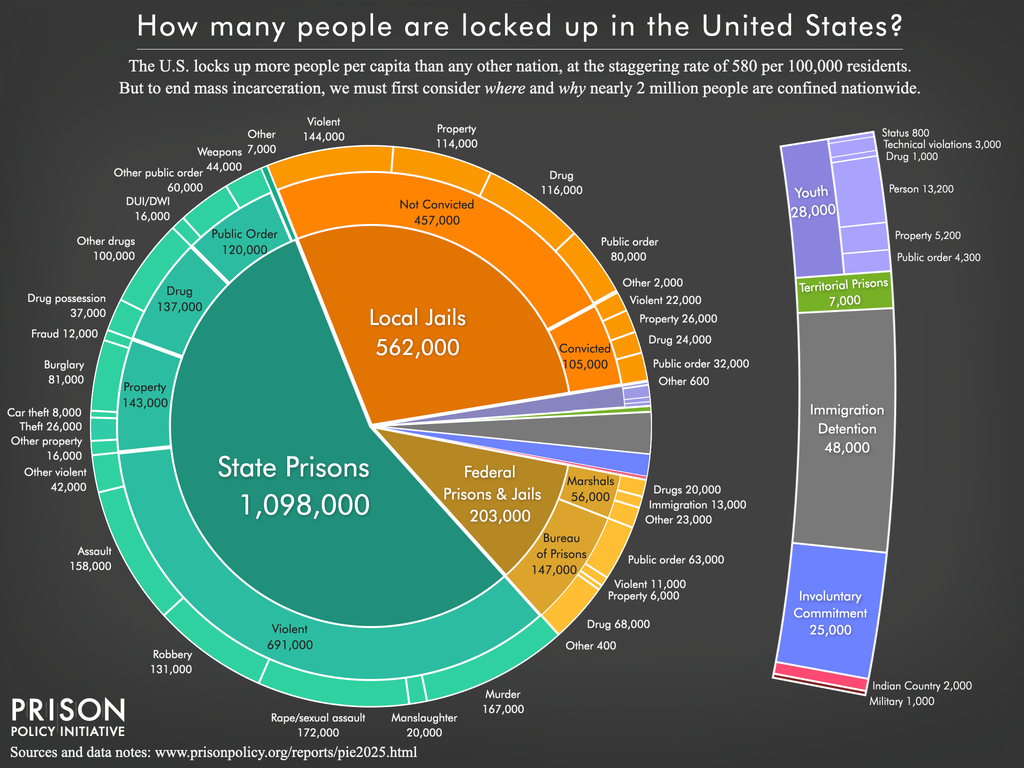
To understand modern corrections, it is not enough to study individual prisons or jails in isolation. The United States operates one of the largest and most complex systems of confinement in the world, and that system extends far beyond the walls of prisons alone. On any given day, nearly two million people are incarcerated across federal and state prisons, local jails, juvenile facilities, immigration detention centers, and civil commitment institutions. When probation and parole populations are included, the number of individuals under correctional supervision grows substantially.
This broader perspective is critical because it reveals a truth that is often missed in public discussion. Mass incarceration is not simply a prison issue. It is a system-wide condition shaped by policy, economics, and social structure.
A System of Systems
One of the most important insights from national data is that incarceration in the United States is highly decentralized. There is no single “correctional system.” Instead, there are thousands of systems operating at different levels of government, each with its own rules, resources, and priorities.
- Local jails function as the entry point, holding individuals awaiting trial, serving short sentences, or detained for supervision violations
- State prisons hold the majority of individuals serving long-term sentences
- Federal prisons house individuals convicted of federal offenses
- Community supervision systems manage millions more on probation and parole
This fragmentation matters because it creates inconsistency. Two individuals with similar charges may experience very different outcomes depending on jurisdiction, bail practices, available resources, and local policy decisions. In that sense, mass incarceration is not just about how many people are confined. It is about how unevenly that confinement is applied.
The Central Role of Jails
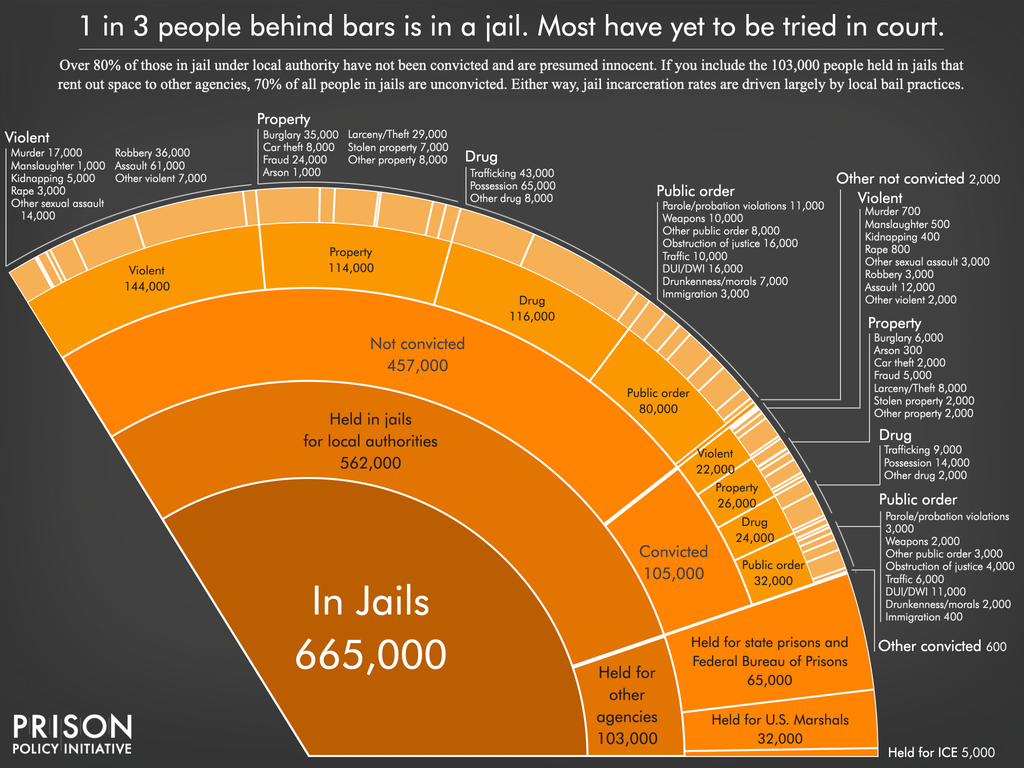
Perhaps the most misunderstood part of the system is the role of local jails. While prisons receive the most attention, jails are where the system begins and where its volume is most visible.
A significant portion of individuals in jail have not been convicted of a crime. They are being held pretrial, often because they cannot afford bail or are awaiting court processing. This reality shifts how we understand incarceration. It is not only a response to guilt. It is also a consequence of process, delay, and economic inequality.
Jails also experience constant turnover. Millions of admissions occur each year, meaning that the impact of incarceration extends far beyond the daily population count. Short-term detention can disrupt employment, housing, education, and family stability, even when individuals are later released without conviction.
This churn helps explain why jails are often described as pressure points in the system. They absorb the consequences of court backlog, policing practices, and gaps in social services.
Policy, Not Just Crime
A common assumption is that mass incarceration is driven primarily by crime rates. While crime plays a role, research consistently shows that policy decisions have been the dominant force shaping incarceration levels.
Key drivers include:
- Mandatory minimum sentencing laws
- Truth-in-sentencing policies that reduce parole eligibility
- The War on Drugs and related enforcement strategies
- Expanded use of pretrial detention
- Revocation practices for probation and parole
These policies have increased both the number of people entering the system and the length of time they remain in it. As a result, incarceration rates grew even during periods when crime rates declined.
This distinction is important for students to understand. If incarceration is shaped by policy, then it can also be changed by policy. The system is not fixed. It reflects choices.
Who Is Affected
Mass incarceration does not affect all populations equally. Certain groups are disproportionately represented within the system, particularly individuals from lower socioeconomic backgrounds and marginalized communities.
This disparity is tied to a range of structural factors, including:
- Unequal access to legal representation
- Differences in policing patterns
- Economic barriers to bail
- Variations in sentencing outcomes
These patterns raise important questions about fairness, legitimacy, and trust in the justice system. For correctional professionals, they also shape the populations they manage on a daily basis.
Institutional Consequences
The scale of incarceration has direct consequences for how correctional institutions operate.
Facilities must manage:
- Overcrowding or near-capacity populations
- Staffing shortages and burnout
- Increased medical and mental health needs
- Greater reliance on classification and control strategies
These pressures create environments where maintaining order becomes more difficult and where reliance on restrictive practices may increase. In this context, issues like prison gangs, staff culture, and the code of silence do not emerge randomly. They develop within systems that are already under strain.
Mass Incarceration and Special Populations
The themes discussed earlier in this chapter are directly connected to mass incarceration.
- Aging inmates are the result of longer sentences and reduced release opportunities
- Individuals with disabilities or chronic illness remain incarcerated in systems not designed for long-term care
- Security Threat Groups gain influence in overcrowded and resource-limited environments
- Staff culture pressures increase in high-risk, understaffed institutions
In other words, the challenges faced inside correctional facilities are not isolated problems. They are symptoms of a larger system operating at scale.
A System That Extends Beyond the Facility
Mass incarceration also extends beyond the time individuals spend inside institutions. A criminal record can affect employment, housing, education, and social relationships long after release. Families and communities are also impacted, particularly in areas with high rates of incarceration.
This broader impact reinforces an important idea. Correctional systems do not simply manage crime. They shape life outcomes.
Reframing the Question
When viewed in its entirety, mass incarceration forces a shift in perspective. The question is no longer just:
How do we manage people inside correctional institutions?
Instead, it becomes:
- Why are so many people entering the system in the first place?
- How long should they remain there?
- What is the purpose of confinement in each case?
- And what are the long-term consequences of those decisions?
Closing Insight
Mass incarceration is not a single policy or a single institution. It is a network of decisions about risk, punishment, control, and responsibility. Understanding that network is essential for anyone studying corrections because it explains why institutions look the way they do and why the challenges discussed in this chapter continue to persist.
It also leads to a final, more difficult question:
If the system is producing the very pressures it struggles to manage, what would it take to change not just how corrections operates, but why it operates the way it does?
Visual Learning Prompt
As you review the Prison Policy Initiative visuals, focus on how incarceration is distributed across prisons, jails, youth facilities, immigration detention, and other systems of confinement. What surprised you most, and how does this challenge common assumptions about who is incarcerated and why?
Inmate Voice and Expression: Beyond the Label of “Offender”
Correctional systems often emphasize classification, security, and risk. Yet incarcerated individuals remain more than the offenses for which they were convicted or accused. One way this becomes visible is through prison newspapers and other inmate-produced writing. These publications provide perspectives on daily life, institutional conditions, personal reflection, frustration, humor, hope, and identity from inside correctional environments.
Reading prison newspapers helps challenge the simplified idea that inmates are merely “simple criminals.” It reveals that incarcerated people interpret their world, critique institutions, describe relationships, and attempt to make meaning of confinement. This does not erase the harm some may have caused, but it complicates the reduction of human beings to a single label. In that sense, prison newspapers serve both as historical documents and as reminders that incarceration affects thinking, expression, and personhood.
For students of corrections, inmate-produced writing is important because it introduces a perspective often missing from administrative reports and policy discussion. It expands the field of vision. Correctional systems are not experienced only through official procedure. They are lived, interpreted, and described by the people inside them.
Supplemental Learning
The following resources expand on the themes in this chapter and provide additional perspectives on aging inmates, Security Threat Groups, prison ethics, and inmate voice.
American Prison Newspapers
Browse any volume, select individual articles or stories, and consider what these writings reveal about incarcerated people as more than official case labels or correctional categories.
Mass Incarceration Visual Report
The Prison Policy Initiative report offers interactive charts and data that place local jails, prisons, immigration detention, and other forms of confinement into a single visual framework.
Conclusion
This chapter reveals a central truth about modern corrections. Institutions do not manage a single, uniform population. They manage elderly inmates, disabled inmates, chronically ill offenders, gang-involved inmates, individuals awaiting trial, and people whose lives have been shaped by poverty, trauma, addiction, and social instability. As a result, correctional administration is never just about custody. It is about deciding how to respond to very different kinds of need, risk, and vulnerability within the same institutional framework.
The chapter also shows that correctional tension operates at every level. Staff must balance loyalty with accountability. Administrators must balance security with dignity. Policymakers must balance cost, public safety, and legitimacy. Institutions must decide whether they exist only to contain, or whether they also bear responsibility for humane treatment, accessibility, and meaningful preparation for release. Attica, mass incarceration, and the rise of special populations all point to the same larger lesson: correctional systems are judged not only by whether they maintain order, but by how they do so.
If corrections must manage both vulnerability and danger, how should institutions decide when a policy is truly protecting safety and when it is simply expanding control at the expense of dignity?

